Data has long powered modern retail, helping Walmart become a master of supply chain logistics and fueling Kroger’s customer-centric strategy. Artificial intelligence and the cloud are fueling explosive growth in retail big data — and transforming customer marketing. And as the retail industry moves online and customer digital engagement is the battlefield, the quality and quantity of data will determine the winners and losers.
This new world requires — more than ever — data discipline. And this is an area that is particularly challenging to smaller retailers and even some regional chains. Data discipline will make or break retail success from this day onward. Here are just a few examples of issues I’ve encountered in talking with retailers:
One retailer still had super abbreviated product descriptions that were used years ago with the old (much narrower) receipts. Product descriptions coming from the retailer’s item file are used to power online shopping — abbreviated descriptions just won’t do it for eCommerce as customers won’t understand what the product is.
Another retailer’s item file lacked any kind of product categorization on nearly 50% of the products carried. Many retailers lack even somewhat accurate product graphics. Retailers with these issues cannot realistically install any kind of marketing personalization capabilities that rely upon product categorization.
And yet another well known regional retailer had many products at store-level that were not represented in item files at the headquarters office; i.e. the merchandisers and buyers at the corporate office did not know what products were in the store. This situation is simply frightening; how can a retailer do effective promotion planning, demand forecasting, let alone any kind of optimization, when HQ doesn’t know what products are in each store?
Data quality issues like these come back to haunt retailers when they look to deploy new capabilities like online shopping, promotion optimization, or marketing personalization — capabilities that are rapidly becoming a cost of entry to compete. And these are issues with what should be basic levels of data required to operate.
Leading retailers are leveraging fast-growing data attributes attached to each individual shopper and each product.
The customer identified transaction data is just the beginning as solution providers like Birdzi calculate and maintain hundreds of data attributes for each individual shopper, from brand loyalty scores to discount propensity, and from product purchase frequency to category spending indexes. Add to this third-party data from companies like Experian or Acxiom that provide dozens or even hundreds more data points.
Category tags, package sizes, and pricing form the core of product based attributes. Label Insight is using AI and machine learning to deconstruct the handful of nutrition attributes on a package to encompass, dozens, hundreds, and even thousands of additional attributes for any given product. Deep nutritional data attributed to individual products is quickly growing in importance as food is increasingly linked to a shopper’s health condition.
The velocity of data is growing as various solutions use real-time shopper location — both inside and outside the store — to provide contextual information. An understanding of the shopper’s intent is provided by a real-time view to what products have just been added to the shopping list, what digital coupons have been clipped, and what products have been searched for.
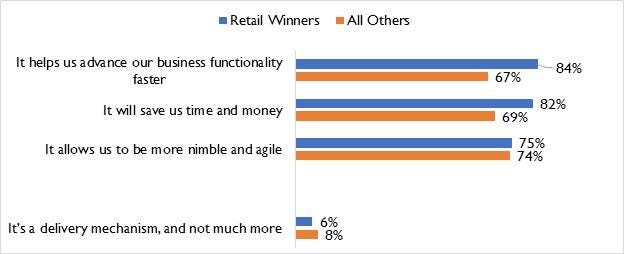
Cloud-based solutions enable regional and smaller retailers to access cutting edge marketing personalization solutions driven by advanced data science to power relevancy across every digital engagement with each individual shopper. The cloud also brings sophisticated pricing, promotion, and product assortment optimization capabilities to retailers cost effectively. But the efficacy of these solutions is directly dependent on the quality and quantity of data feeding them.
Retailers embarking on data-driven strategies would be well served to first assess the quality of their core data (product descriptions, categorization, pricing, product cost, vendor codes, and more). Retailers with loyalty programs should examine how clean and up to date their customer contact data is along with how customer loyalty IDs roll up to households (this area is particularly vexing as retailers often just distribute cards). Building on a now-solid base, consider bringing in third-party data to permit scoring share-of-wallet by customer household in addition to other attributes that can improve targeting and personalization.
Read More :- https://www.leptonsoftware.com/
Comments
Post a Comment